
Claims · Getting paid
Why Medical-Aid Claims Get Rejected - and How to Fix the Top Reasons
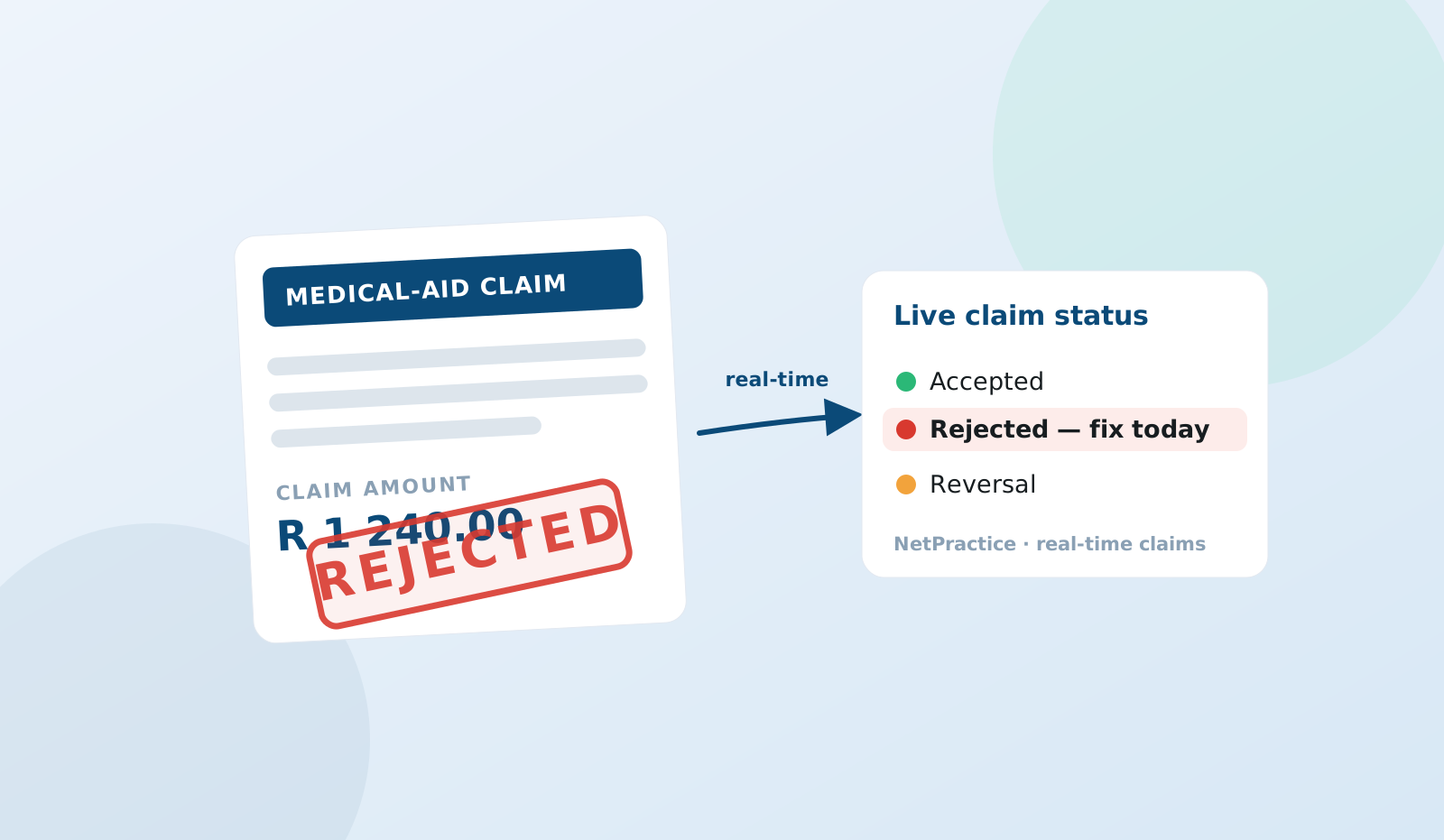
A rejected medical-aid claim is not just admin - it's money that doesn't arrive. And because most practices only find out a claim bounced at month-end, the gap between "submitted" and "actually paid" is where practice cash flow quietly leaks.
The good news: the vast majority of rejections come from a short list of fixable causes. Here are the most common ones in South African practice, and how to stop them costing you a pay cycle.
If a claim has come back and you want to check the codes on it, the free ICD-10 claim checker applies the structural rules schemes reject on, in your browser.
The top reasons claims get rejected
- Incorrect or missing member details - a wrong membership number, missing dependant code, or a member who isn't active on the date of service.
- No authorisation - procedures that needed pre-authorisation submitted without it (or with the wrong auth number).
- Wrong practice or provider numbers - the treating or billing provider's number doesn't match what the scheme expects.
- Benefit exhausted or excluded - the member's day-to-day or relevant benefit is depleted, or the service isn't covered by their plan.
- Late submission - past the scheme's claim-submission window, which is an automatic rejection no matter how valid the claim.
- Incorrect tariff or procedure codes - outdated or mismatched codes for the service rendered.
- Duplicates - the same claim submitted twice, which schemes reject on sight.
Why the timing is what really hurts
Notice that almost all of these are correctable - a fixed detail, a re-submission, an authorisation obtained. The problem is rarely that the claim can't be paid; it's that nobody finds out it was rejected until it's too late to fix cheaply. Discover a rejection on the day and it's a two-minute correction. Discover it at month-end and it's a backlog, a follow-up, and cash that's a month late - or, past the submission window, gone.
The fix: submit in real time and see the outcome immediately
This is the single biggest lever a practice has. NetPractice submits your claims to the medical schemes in real time - as you finish the consultation - and shows you live accepted, rejected and reversal status. A rejection isn't a month-end surprise; it's something you see and fix today, while the patient details and authorisation are still in front of you.
Because the claim is built straight from the visit, the common data-entry causes above are caught at source, and you're not re-keying anything. It's free under 11 claims a month, then a flat R9.50 per claim - no plans, no contract.
A quick checklist to cut rejections
- Confirm membership number, dependant code and that the member is active on the date of service.
- Get and capture authorisation before procedures that need it.
- Use the correct treating and billing provider numbers.
- Use current tariff/procedure codes.
- Submit promptly - ideally in real time - and watch the status.
- Act on rejections the same day, not at month-end.
Frequently asked questions
What's the most common rejection reason?
Member-detail and authorisation errors top the list - both are caught early when you validate at capture and submit in real time.
Does real-time submission really make a difference?
Yes - it converts a month-end backlog into same-day, two-minute corrections, and stops valid claims aging past the scheme's submission window.
Stop finding out about rejections at month-end. Submit claims in real time with NetPractice - free to start →