
Practice setup · Getting started
How to Start a Private Practice in South Africa - and Get Paid From Day One
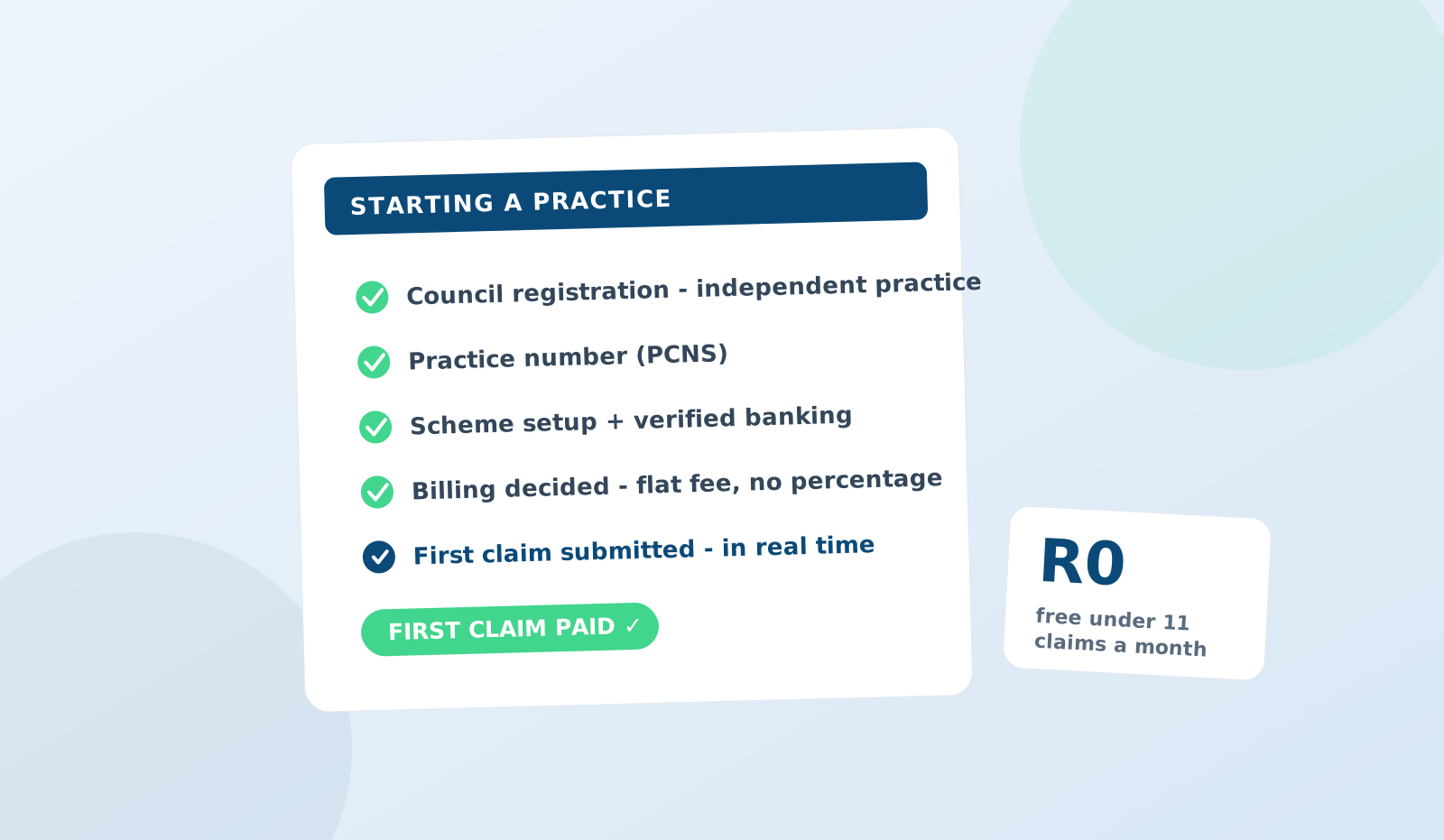
Between qualifying and your first paid claim sits a stack of admin nobody teaches you: registrations, a practice number, scheme paperwork and a billing decision. Get the order right and the gap is weeks. Get it wrong and you're seeing patients you can't claim for.
Here's the sequence that works, and where each step tends to go wrong.
Step 1 - Register with your professional council
Everything downstream depends on this. Whether it's the HPCSA, the SANC for nursing professionals, or the SACSSP for social workers, you need to be registered in a category that permits independent private practice - not just registered. If you're moving from employment into private work, confirm your registration category allows it before you spend a rand on rooms.
Step 2 - Get your practice number (PCNS)
Medical schemes don't pay people; they pay practice numbers. The PCNS number, administered through the Board of Healthcare Funders, is what identifies your practice on every claim, every remittance advice and every payment. Two things trip new practices up:
- Applying late. Allow several weeks. Every week without the number is a week of patients you can't claim for - apply the moment your council registration is confirmed.
- Wrong practice type or speciality code. Your practice number encodes your discipline, and schemes adjudicate tariffs against it. If it doesn't match what you actually do, claims reject or underpay from day one.
Step 3 - Set yourself up with the schemes
With the practice number active, the schemes need to know who you are, where you practise and - critically - where to pay you. Banking details registered wrongly (or changed and not synchronised to every scheme) are one of the most common causes of payments going missing. When your details change later, update every scheme, not just the big ones - here's the full walkthrough.
Step 4 - Decide how you'll bill before the first patient
You have three options - a billing bureau that takes a percentage of collections, hiring someone in-house, or flat per-claim software. We've done the full cost comparison, but the short version for a new practice is blunt: you don't have the volume to justify a bureau's percentage or a salary. What you need is something that costs nothing while you're small.
Step 5 - Submit from day one, in real time
NetPractice is free under 11 claims a month - which describes most practices' first months. You capture the visit, the claim goes to the scheme in real time, and you see the accepted, rejected or reversal status live. For a new practice that matters twice over:
- Cash arrives from the first payment run - no batch lag, no month-end surprises while your reserves are thinnest.
- You learn your rejection causes immediately - a new practice's early claims are where the detail errors live (codes, dependant numbers, authorisations). Fixing them same-day builds a clean claim history instead of a backlog.
When you outgrow the free tier, it's a flat R9.50 per claim - no contract, no percentage of your growth.
The checklist
- Council registration in an independent-practice category.
- PCNS practice number - applied for early, correct practice type.
- Scheme setup with verified banking details.
- Billing decision made before the first patient.
- First claim submitted in real time, on the day.
Frequently asked questions
Can I see patients while I wait for my practice number?
You can see them, but you can't claim from schemes for that work - patients would pay privately. That's why the application should go in the moment your council registration is confirmed.
What's the single most expensive setup mistake?
Committing to a percentage-based billing arrangement before you have volume. The costs scale with your success, and they're hard to unwind once your admin is built around them.
Starting out? Your billing should cost R0. Open a free NetPractice account - free under 11 claims a month →