
Getting paid · Cash flow
How Long Do Medical Schemes Take to Pay - and How to Get Paid Faster
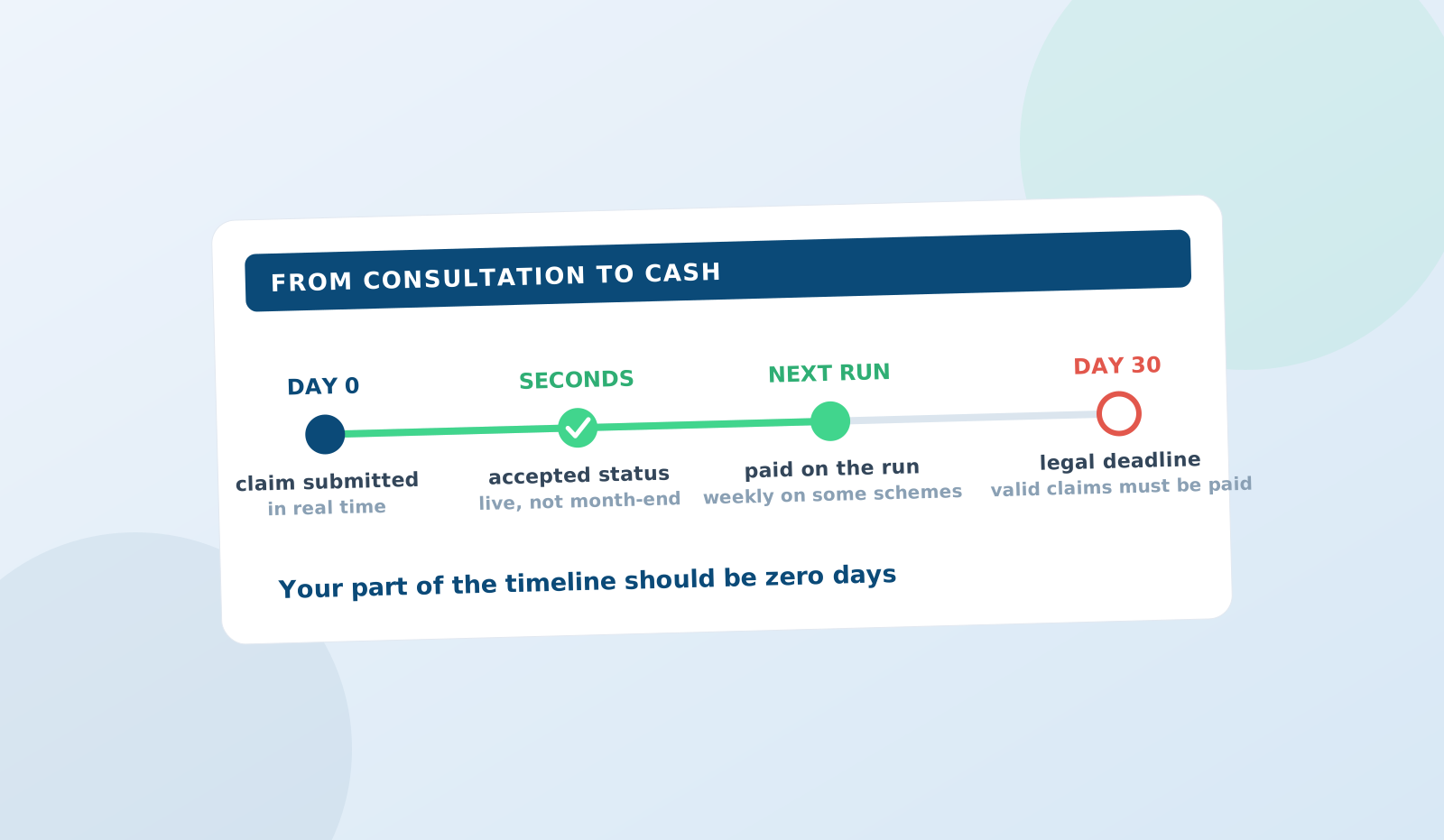
Every practice knows the feeling: the work is done, the claim is in, and now... nothing. The truth is that "how long do schemes take to pay" has a precise answer - and most of the delay practices experience isn't the scheme's part of the timeline. It's theirs.
The rules of the game
- The 30-day rule. The Medical Schemes Act requires schemes to pay valid claims within 30 days. In practice, schemes run on payment cycles well inside that.
- Payment runs. Each scheme pays on a fixed run - weekly, fortnightly or monthly. A clean claim that lands before the cut-off is paid on the next run; miss it and you wait a full cycle.
- The four-month cliff. Claims generally go stale four months after the date of service. After that, schemes reject them outright - the money is simply gone. This is the deadline that quietly writes off revenue in busy practices.
Where the time actually goes
Follow a claim end-to-end and the scheme's processing is usually the fast part. The slow parts are on the practice side:
- Submission lag - the days between seeing the patient and the claim reaching the scheme. Batched weekly? That's up to a week of self-inflicted delay before the clock even starts.
- Rejection round-trips - a rejected claim discovered late doesn't just need fixing; the corrected claim re-enters the queue and waits for the next run. One unnoticed rejection can add a month.
- Stale details - banking details out of sync with a scheme can leave money paid but stranded, or claims held. (Changed banks recently? Update every scheme, not just the big ones.)
The three levers that actually speed things up
- Submit on the day of service. NetPractice sends the claim in real time as you finish the consultation - your part of the timeline drops to zero, and every clean claim is positioned for the earliest possible run.
- See the outcome immediately. Live accepted, rejected and reversal status means a problem claim is a same-day, two-minute fix - the corrected claim usually still makes the run it would otherwise have missed. (Here's why claims get rejected and what real time does to the maths.)
- Work the paper trail weekly. Short payments, patient portions and reversals on the remittance advice are money in motion - read it line by line the week it arrives, while everything is still inside the four-month window.
What a well-run claim timeline looks like
- Day 0: consultation captured, claim submitted in real time, accepted status back in seconds.
- Cut-off: claim is already in the queue - nothing to batch, nothing to remember.
- Next payment run: money lands. On a weekly-run scheme, that can be inside the same week.
- Rejection case: flagged on day 0, fixed on day 0, still makes the run.
Frequently asked questions
Why did one scheme pay in a week and another take a month?
Different payment runs. Weekly-run schemes pay clean claims fast; monthly-run schemes make you feel every missed cut-off. Your lever is the same either way: be in the queue on day 0, clean.
Can I recover a claim older than four months?
Generally no - stale claims are rejected regardless of validity. The defence is upstream: submit and fix fast enough that nothing ever approaches the cliff.
Your part of the payment timeline should be zero days. Submit claims in real time with NetPractice - free under 11 claims a month →