
Practice operations
Where the admin hours actually go in a private practice
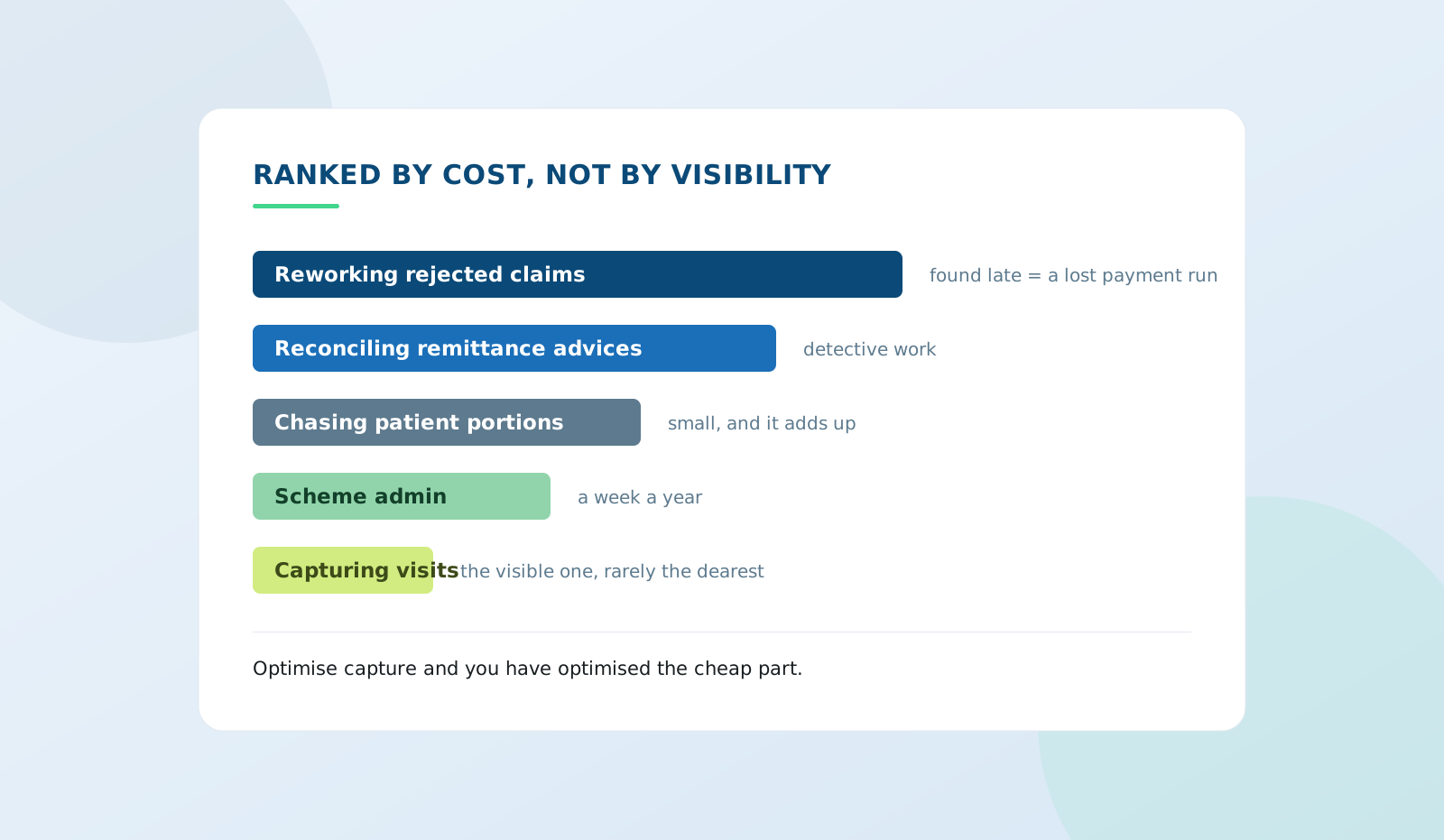
Ask a practitioner what the admin is and they will usually describe capturing visits. Ask them what the admin costs them and it turns into something else entirely: an hour on the phone to a scheme, a Saturday reconciling a remittance advice, a debtors list nobody has worked in six weeks.
That gap matters, because the two problems have different answers. Capturing is repetitive work and software is good at it. Chasing money that did not arrive is investigative work, and no amount of software removes it. What software can do is make there be less of it to investigate.
The five real time sinks
1. Reworking rejected claims
This is almost always the biggest, and it is the one practices most consistently underestimate, because the time is scattered rather than blocked. A rejection needs someone to work out why, fix it, and resubmit. A wrong membership number takes two minutes. A coding problem takes twenty and a phone call.
The cost is not the fix, it is the delay. A rejection found on the day of service is a two-minute correction that still makes the same payment run. The same rejection found three weeks later is the same two-minute correction plus a month of waiting. Same work, completely different consequence. The common causes and their fixes are here.
2. Reconciling remittance advices
The scheme pays a lump sum. Working out which claims it covers, which were short-paid, which were rejected and which are now the patient's to pay is genuine detective work, and it is where practices leave the most money on the table simply from running out of afternoon.
Partly automatable: matching payments to claims can be done for you. The judgement calls, deciding whether to dispute a short payment or write it off, cannot. This walks through reading one properly.
3. Chasing patient portions
Co-payments, amounts above scheme rates, and services the plan does not cover. Individually small, collectively significant, and awkward because the person who owes you money is also someone you have a clinical relationship with.
Statements and reminders are automatable. The conversation is not, and it should not be, because the practice that automates its way out of that conversation entirely tends to lose the patient along with the debt.
4. Scheme admin that has nothing to do with claims
Registrations, provider detail updates, banking changes, benefit queries. Low frequency and high friction, and each one has its own form, process and follow-up. Nobody budgets for this and it consistently costs a working week a year.
The banking one is the worst of them, because it must be done with every scheme separately and a single miss sends your payments to the wrong account. That is specific enough that we built BankSwitch to do it in one flow, and there is a walkthrough of the manual process here if you would rather do it yourself.
5. Capturing visits
Last on the list, deliberately. It is the most visible admin and rarely the most expensive, because it is predictable and it scales with the work you are already being paid for. It is worth making fast, but a practice that only optimises capture has optimised the cheap part.
Why month-end feels worse than it should
Here is the structural problem, and it is worth seeing clearly because it explains most of the pain.
If you find out about rejections at month-end, then month-end is when a month of accumulated problems arrives at once. Every one needs investigating, every one has already missed a payment run, and they all land in the same week as your statements and your reconciliation. It is not that month-end is inherently heavy. It is that a delayed feedback loop concentrates a month of small problems into a few days.
Shorten the loop and the peak flattens. The work does not disappear, but it stops arriving all at once, and each individual piece of it costs less because it is caught early enough to still be cheap.
What is honestly not automatable
Worth stating, because the alternative is a disappointing purchase.
- Clinical documentation. Templates help. The thinking does not compress.
- Phone calls to schemes. Complex queries still need a person on hold.
- Deciding what to write off. A judgement about a patient, a scheme relationship and an amount.
- Coding decisions. Software can stop you selecting an invalid code, and should. It cannot decide which code describes what you did.
If you want to know your own numbers
Two measurements, both of which take an afternoon and are more useful than any benchmark:
- Count last month's rejections and how long each took to notice. The lag is the number that matters, not the count.
- Add up rejected and short-paid lines from the last three remittance advices that nobody went back to. That is your annual leak, and it is usually larger than the cost of fixing it.
Most practices have never done the second one. It reframes the software question from a cost to a comparison.
Frequently asked questions
Is it cheaper to outsource billing entirely?
Sometimes, particularly if nobody in the practice has time. A bureau typically charges a percentage of collections, so the cost rises with your turnover, and you hand over the scheme relationship with the admin. The comparison is here.
How much time does real-time submission actually save?
Less than you would guess on capture, and much more on rework, because the same correction costs a fraction of the effort when the file is still open and the payment run has not gone.
We are a small practice. Is this worth changing?
Small practices feel it more, not less, because the same admin lands on fewer people and usually on the practitioner. There is a free allowance of 10 claims a month precisely so that testing it costs nothing.
Shorten the loop on the expensive part. See rejections the same day - your first 10 claims each month are free →